ArcDivan logo Archidivan Architecture, design and intelligent tools
Current section

2023

A full-browser white-on-black reading experience with orange architectural accents, without the old three-column blog look.

Explore Archidivan by architectural discipline

Smart Categories

Visitors can move by discipline instead of date. This is stronger for architects because they usually browse by design problem, material, software, specification topic, or supplier need.

What do you know about ChatGPT?

What do you know about ChatGPT?

Allow me to introduce ChatGPT as it describes itself.

A state-of-the-art language model created by OpenAI. I'm designed to understand and generate human-like text based on the prompts I receive. I've been trained on a diverse range of internet text, which means I can assist with a wide variety of tasks, including but not limited to:


Information Retrieval: I can provide information on various topics, like history, science, technology, literature, and more. Just ask me a question, and I'll do my best to provide an informative response.


Writing Assistance: I can help you generate content for emails, reports, articles, essays, creative writing, and more. Just give me a prompt, and I can help you draft or refine the text.


Language Translation: I can assist with translating text from one language to another.


Programming Help: I can offer guidance and code snippets for various programming languages, although I may not be as specialized as dedicated programming tools.


Learning and Education: I can help explain concepts, answer questions, and assist with studying for various subjects.


Task Automation: I can generate responses or perform simple tasks based on your instructions.


Creative Writing and Storytelling: I can help generate ideas, characters, plots, and dialogue for stories, scripts, or any creative writing project.


Casual Conversation: If you just want to chat or have some light-hearted interaction, I'm here too!


To use me in your daily duties, all you need to do is type out your request or question, and I'll do my best to provide a helpful response. Remember that while I strive for accuracy, I can still make mistakes, so always double-check critical information.


Remember, I don't have access to current information beyond September 2021, so for the most up-to-date information, you may need to consult more recent sources.

Jim Jordan

Jim Jordan is widely recognized in American politics due to his time in the U.S. House of Representatives. Jim Jordan, born in Urbana, Ohio on February 17, 1964, has gained a reputation as a conservative firebrand and a strong advocate for the principles of limited government, fiscal responsibility, and social conservatism.


Jordan began his political journey in the Ohio State House, where he served as a state representative from 1995 to 2000. He gained recognition for his advocacy of individual liberty and traditional values during this period. His conservative stance led to his election to the U.S. House of Representatives, where he has been representing Ohio's 4th congressional district since 2007.


Jordan's role as a founding member of the House Freedom Caucus in Congress is one of his most significant. The group, which includes some of the most conservative members of the House, has advocated for a limited government, lower taxes, and adherence to the Constitution. Jordan's position in this caucus has made him a conservative icon.


Jordan has been a proponent of conservative economic policies throughout his career, advocating for the reduction of government spending, tax cuts, and deregulation. He has consistently stood against big-government initiatives, such as the Affordable Care Act (Obamacare) and various spending bills that he deemed fiscally irresponsible. He has become a respected voice within the Republican Party due to his unwavering commitment to fiscal conservatism.


Jordan has been vocal about his support for pro-life policies and traditional marriage on social issues. His opposition to abortion rights and support for measures to safeguard the sanctity of life has been consistent. Additionally, he has been a fervent advocate for religious liberty, particularly when it has come into conflict with government policies.


Jim Jordan has not been without controversy during his political career. He faced scrutiny and criticism during his involvement in investigations related to the Trump impeachment trials. His staunch defense of the former president and his positions on these matters drew both support and opposition.


In 2021, Jordan was awarded the Presidential Medal of Freedom by then-President Donald Trump. This was a significant honor and underscored his influence and impact on conservative politics.


Jim Jordan's political career has led to his becoming a controversial figure. His unwavering commitment to conservative principles and his willingness to challenge the establishment are applauded by supporters. Critics contend that his positions are too extreme and that he has caused political polarization in the United States.

Marcel Marceau: A Master of Mime

 Marcel Marceau: A Master of Mime


Marcel Marceau was a renowned French mime artist who captivated audiences around the world with his unique and mesmerizing performances. He is widely regarded as one of the greatest mimes in history, and his contributions to the art form have influenced generations of performers. In this article, we'll take a closer look at Marceau's life, his artistry, and his enduring legacy.


Early Life and Career


Marcel Marceau was born Marcel Mangel in Strasbourg, France in 1923. His parents were Jewish, and his father was a butcher who was killed in Auschwitz during World War II. Marceau himself was a member of the French Resistance during the war, helping Jewish children escape to Switzerland.


After the war, Marceau began his career as a performer, studying at Charles Dullin's School of Dramatic Art in Paris. He soon discovered a talent for mime, and in 1947 he created the character of Bip, a mischievous, childlike clown who would become his most famous persona.


Artistry and Legacy


Marceau's performances were characterized by his mastery of movement and gesture, his ability to convey complex emotions without words, and his keen sense of humor. His repertoire included a range of characters and situations, from the tragic to the comic, and his performances were often accompanied by music.


Marceau's work had a profound impact on the art of mime, helping to elevate it to a respected and widely recognized form of theater. He toured the world with his performances, inspiring audiences and performers alike. In addition to his work as a performer, Marceau was also a teacher, passing on his knowledge and expertise to a new generation of mimes.


Legacy and Influence


Marcel Marceau's legacy continues to be felt in the world of mime and beyond. He was recognized with numerous awards and honors during his lifetime, including France's highest civilian honor, the Legion of Honor, and he was inducted into the International Clown Hall of Fame in 1999.


Marceau's impact on the world of theater and performance is immeasurable, and his influence can be seen in the work of countless artists who have followed in his footsteps. His dedication to the art of mime and his commitment to using his talents to promote peace and understanding serve as an inspiration to us all.


Conclusion


Marcel Marceau was a true master of mime, a performer who used movement and gesture to convey powerful emotions and tell stories without words. His influence on the art of mime and on the world of theater as a whole is immeasurable, and his legacy continues to inspire new generations of performers. Marcel Marceau will always be remembered as a true artist and a great humanitarian.

Filipino Adobo: A Delicious and Iconic Dish

  Filipino Adobo: A Delicious and Iconic Dish


Filipino Adobo is a popular and beloved dish in the Philippines, known for its mouth-watering and savory flavors. The dish is a staple in many Filipino households and is often served during family gatherings, celebrations, and even on regular days. Adobo is a versatile dish that can be made with different meats such as chicken, pork, or even seafood, and is typically served with rice. In this article, we'll take a closer look at what makes this dish so special and how it has become an iconic part of Filipino cuisine.


Origins of Adobo


The origins of Adobo can be traced back to the pre-colonial era in the Philippines. The word "Adobo" comes from the Spanish word "adobar," which means to marinate or season meat. During the Spanish colonial period, the dish was introduced to the Philippines, and over time, it evolved into what we know today as Filipino Adobo.


Ingredients and Preparation


The basic ingredients of Adobo include meat (chicken or pork), vinegar, soy sauce, garlic, and bay leaves. Some variations may add sugar, onions, or coconut milk to the mix. The dish is traditionally prepared by marinating the meat in the vinegar, soy sauce, garlic, and bay leaves for several hours. After marinating, the meat is then cooked in the marinade until it is tender and the sauce has reduced to a thick, rich consistency.


Variations of Adobo


While the classic Adobo recipe is made with chicken or pork, there are many variations of the dish that use other types of meat or seafood. Some popular variations include Adobong Manok sa Gata, which adds coconut milk to the sauce, Adobong Pusit, which uses squid instead of meat, and Adobong Kangkong, which uses water spinach as the main ingredient.


Adobo Beyond the Philippines


Filipino Adobo has gained popularity outside of the Philippines, and can now be found in many Filipino restaurants around the world. The dish has also been featured in several international food shows and has become a symbol of Filipino cuisine.


Conclusion


Filipino Adobo is a dish that embodies the flavors and history of the Philippines. The combination of vinegar, soy sauce, garlic, and bay leaves creates a unique taste that is both savory and tangy. The dish's versatility and simplicity make it a popular choice for everyday meals and special occasions. Whether you are a Filipino or a food enthusiast, Filipino Adobo is a must-try dish that is sure to leave you wanting more.


Napoleon Bonaparte and Russia


Napoleon Bonaparte, one of the most renowned military commanders in history, is known for his ambitious military campaigns and successful conquests across Europe. However, his disastrous campaign against Russia in 1812 is considered to be one of the biggest military blunders of his career. In this article, we will explore the events leading up to the war and the consequences that followed.

Napoleon's Grand Army, which consisted of more than half a million men, invaded Russia in June 1812. The invasion was a part of Napoleon's plan to expand his empire further east and bring Russia under his control. However, the Russian army, led by General Mikhail Kutuzov, employed a scorched earth policy, destroying everything in the path of the French army, including crops, buildings, and supplies.

As the French army advanced, they were met with fierce resistance from the Russian army, who engaged in guerrilla tactics and avoided direct confrontation. This resulted in the French army becoming increasingly isolated and cut off from their supply lines. The Russian winter, which was one of the harshest in history, further added to their woes.

The French army, which was already suffering from starvation, diseases, and harsh weather conditions, was further weakened by a series of disastrous battles, including the Battle of Borodino in September 1812. Despite being able to capture Moscow, Napoleon was unable to secure any significant victories and was forced to retreat from Russia in October of the same year.

The retreat was a disaster, with the French army being constantly harassed by the Russian army and subjected to brutal weather conditions. By the time they reached the border, the Grand Army was reduced to a mere fraction of its original strength, with more than 400,000 men being killed or captured during the campaign.

The consequences of the war were catastrophic for both France and Russia. France suffered a significant loss of manpower, resources, and morale, which weakened the country's position in the subsequent wars. The Russian army, on the other hand, emerged victorious but at a great cost, with more than 200,000 men being killed or injured during the war.

The war with Russia was one of the most significant turning points in Napoleon's career, and it marked the beginning of his downfall. It also highlighted the importance of logistics, supply lines, and proper planning in military campaigns. The lessons learned from this campaign would be utilized in future conflicts, and it would inspire other military commanders to avoid similar mistakes.

Napoleon's invasion of Russia in 1812 was a disastrous campaign that resulted in the loss of hundreds of thousands of lives and resources. The harsh Russian winter, the Russian army's guerrilla tactics, and the scorched earth policy employed by the Russians all contributed to the French army's defeat. The consequences of the war were significant, and it marked the beginning of Napoleon's downfall.

What is the Triangle of Life?


The Triangle of Life is a controversial concept that has gained attention in recent years as a potential way to survive earthquakes. It was first proposed by Doug Copp, a rescue worker who survived the 1985 Mexico City earthquake. In this post, we will discuss what the Triangle of Life is and what Doug Copp found about what to search for in case of earthquakes to save your life inside the triangle of life.

What is the Triangle of Life?
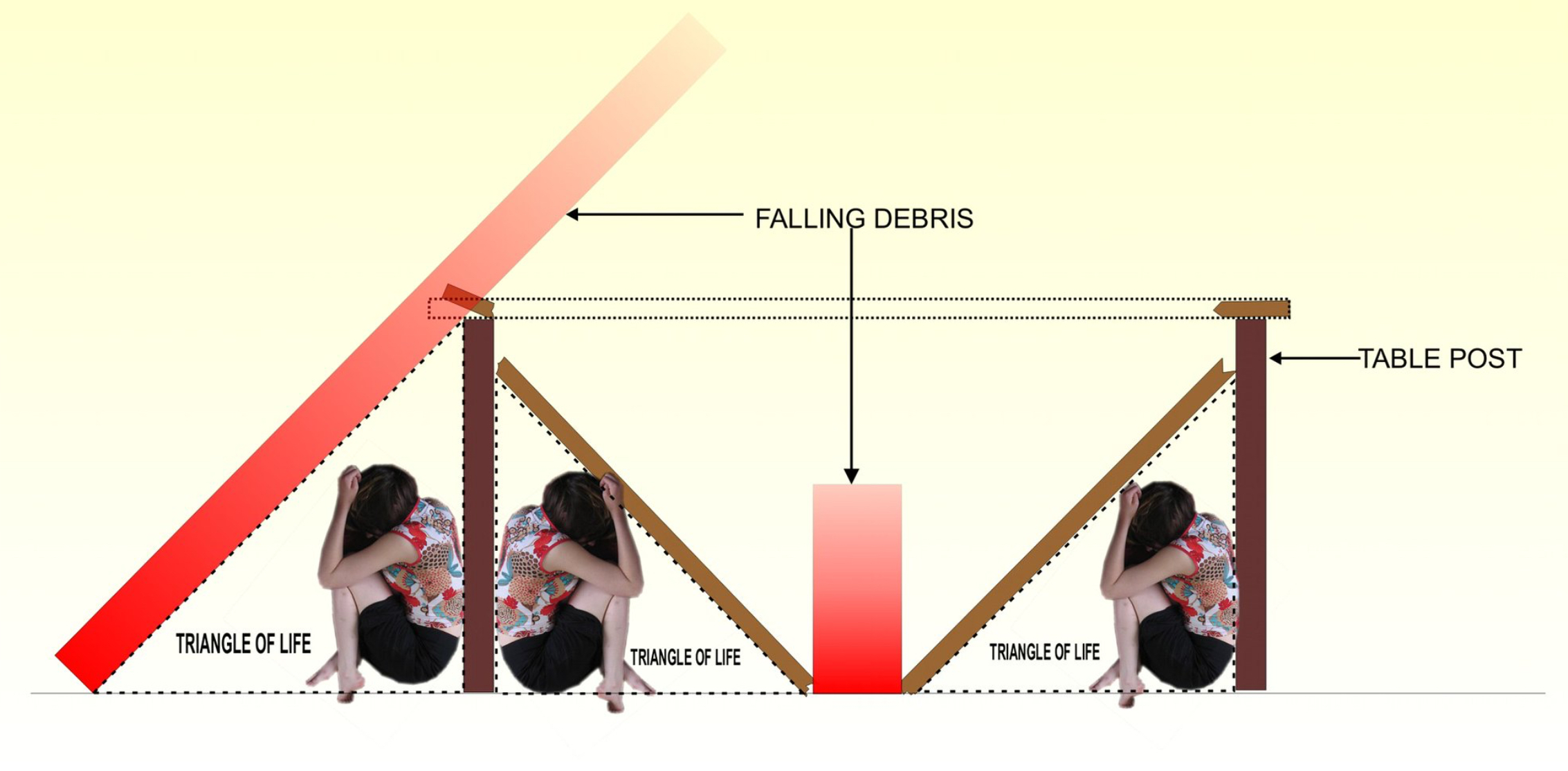
The Triangle of Life is a term coined by Doug Copp to describe a survival strategy during earthquakes. The concept is based on the idea that in a collapsed building, the safest place to be is not necessarily under a sturdy table or desk as traditionally believed. Instead, Copp argues that the best way to survive is to seek shelter in the space next to a large object or furniture that could potentially create a void, such as a sofa or bed.
According to Copp, the space next to these objects is called the "Triangle of Life." In the event of a collapse, the object will create a triangular space next to it, providing protection from falling debris. Copp argues that this space is much larger than the space under a desk, and therefore offers a greater chance of survival.

As chief of the American Rescue Team International for the past 16 years, Doug Copp had been circling the globe, offering his services in disaster zones from from El Salvador to Turkey.

You can read more about ( https://www.nbcnews.com/id/wbna8565549 )

What did Doug Copp find about what to search for in case of earthquakes?

Doug Copp spent years researching earthquake safety and rescue strategies. He found that the traditional advice of "drop, cover, and hold on" was not always the best course of action. Instead, he recommends the following steps to increase your chances of survival:

  1. Drop to the ground and cover your head with your hands.
  2. If possible, crawl to the Triangle of Life next to a large object or furniture.
  3. Stay alert and be prepared to move if necessary.

Copp also emphasizes the importance of being prepared for earthquakes by having an emergency kit, knowing how to turn off utilities, and having a plan in place for communicating with loved ones.

However, it is important to note that not everyone agrees with Copp's theory. Some experts argue that seeking shelter in the Triangle of Life could actually increase your risk of injury, as the furniture or object next to you could shift or collapse, trapping you. Others argue that seeking shelter under a sturdy desk or table is still the safest course of action.

The Triangle of Life is a controversial concept that has gained attention in recent years as a potential way to survive earthquakes. While some experts disagree with this theory, others believe that seeking shelter in the space next to a large object or furniture could increase your chances of survival. It is important to be prepared for earthquakes by having an emergency kit, knowing how to turn off utilities, and having a plan in place for communicating with loved ones.