ArcDivan logo Archidivan Architecture, design and intelligent tools
Current section

A full-browser white-on-black reading experience with golden architectural accents, without the old three-column blog look.

Explore Archidivan by architectural discipline

Smart Categories

Visitors can move by discipline instead of date. This is stronger for architects because they usually browse by design problem, material, software, specification topic, or supplier need.

Diagnosing & Fixing the AC Blower Noise (2017 Sonata 2.4L Sport)

If you hear a loud squeal or rattle from the front passenger footwell whenever the AC blower is on (especially at low speeds), the problem is almost always in the HVAC blower assembly. In a 2017 Sonata the blower motor and fan sit under the passenger glove box. Common issues include debris in the blower or a worn blower motor/fan. This guide will walk you through the most likely causes (from most to least probable), and give step-by-step instructions for inspecting, cleaning, and if needed replacing the blower motor assembly – all using basic hand tools. By the end, you should be able to fix the noise yourself or determine that the blower motor itself must be replaced.


97113-C2000

Part number 

97113-C2000


Possible Causes (most likely first)


  • Debris in the blower housing or ductwork.  A torn or loose cabin filter (even if recently changed) can allow leaves, dirt, or small objects into the blower housing. The factory warns that rough handling of the filter can drop debris into the blower and cause noise . Even particles that bypass the filter can accumulate on the blower’s fan cage. Over time this dirt will unbalance the fan or jam the housing, causing squeaks or rattles during operation . For example, clumped dust on the fan “cage” (squirrel-cage) blades can throw the fan off-balance and put strain on the motor, leading to noise .
  • Dirty or bent fan blades.  If the fan blades (the round blower cage) have caked-on grime or are bent/cracked, they will hit the housing or spin unevenly. Even a small leaf stuck between the fan and housing can create a rubbing noise at low speeds. Inspect the fan carefully – any chipped or missing fins mean the fan is imbalanced and should be replaced (the blower comes as one assembly).
  • Worn blower motor bearings or loose motor mount.  The blower motor has internal bearings; when these wear out or the motor mounts loosen, the fan can wobble or the bearings can squeal. RepairPal notes that a failing blower motor often makes a grinding or rattling noise under the dash, especially noticeable at certain speeds . If the fan spins unevenly when turned by hand (feeling catch or grinding), the motor likely needs replacement.
  • HVAC actuator/door noise (less likely).  Blend‑door or mode‑door actuators can sometimes make clicking or tapping noises when faulty. These usually sound different (more like a click or knock when changing temperature/modes) and are less likely if the noise is a continuous whine when the blower runs. However, if you hear a repetitive click (not a whine) when first engaging the AC, an actuator might be the culprit (see blend door actuator issues in Hyundai forums).
  • Blower resistor or control module.  A failing blower motor resistor or fan speed control module can cause strange behavior (like only high-speed working), but it rarely produces a loud noise by itself. Since your fan works on all speeds (just noisily), the resistor is unlikely the cause. (As RepairPal notes, resistor faults usually manifest as loss of some speeds, not noise .)
  • Other possibilities.  In rare cases, structural issues like a loose HVAC cover, broken plastic pieces in the duct, or even a stray nut/bolt can cause rubbing noises. Also, check for any sign of rodents – nests or insulation that a mouse or squirrel might have carried in (mechanics often find these in blower units). But focus first on the blower motor and fan itself, as debris and motor issues are far more common.


Step-by-Step Inspection and Cleaning


  • Prepareand gather tools.  Park on a level surface, turn off the engine, and remove the key. Disconnect the negative battery terminal to prevent any electrical hazards (a good safety practice recommended before working on HVAC components ). You’ll need basic tools: a Phillips screwdriver or socket set (often 8mm or 10mm) to remove panels and the blower, a flashlight, a small brush (soft-bristle or toothbrush), a shop vacuum or small hand vacuum, and a clean towel. Wear gloves and eye protection if available – the blower area can be dusty.
  • Remove the glove box / lower panel.  To access the blower, you must drop or remove the passenger glove box or its lower cover. In 2017 Sonatas, this usually means opening the glove box, disconnecting the damper arm, and lowering it out of the way, then removing the plastic panel beneath it. Specifically, remove any screws or clips securing the panel under the glove box on the passenger side. Once unbolted, the panel should pull straight down, revealing the HVAC ductwork. (HyundaiPartsDeal notes: for 2006+ Sonatas, “remove the fasteners securing the panel below the glove box, then pull the panel off” .) After this, you’ll see the blower housing – a white or black plastic rectangular case mounted under the dash on the passenger side.
    • Tip: Keep track of all screws and clips. These panels are usually held by a few Phillips screws and plastic push‑pins. Organize them so you can reinstall everything properly.
  • Expose the blower motor housing.  With the lower panel removed, you should see the blower “case” (usually rectangular or cylindrical) and an electrical connector on it. At this point the blower assembly is exposed behind the passenger dash.
The blower motor assembly (housing and fan cage) sits behind the glove box. Dust and debris on these fins will unbalance the fan and cause noise . Use a flashlight to inspect this assembly: note any dirt on the fan blades or in the housing. If the fan fins look clogged or the housing has foreign objects, plan to clean them. As the Hyundai service bulletin advises, carefully inspect the blower unit for debris and vacuum it out if needed .
  • Disconnect and remove the blower motor.  First, unplug the electrical connector from the blower motor (simply pull apart). Then remove the blower’s retaining screws. There are typically 3–4 screws holding the blower (often Phillips-head or 8mm bolts). Once the screws are out, you can pull the blower motor (with its fan attached) straight out of the housing . Take care – the blower is a bit bulky and the harness may catch on ductwork.

    1. Tools: Screwdriver or small ratchet for screws; a flashlight helps see the screw heads.
    2. After removal: You will have the blower motor/fan assembly in your hands. Now you can fully inspect and clean it.
  • Inspect the blower fan (cage) and housing.  Look closely at the fan cage and the interior of the blower housing. Rotate the fan wheel by hand. It should spin smoothly and freely. Feel for any rough spots, wobbling, or scraping sounds as you turn it . If the fan is hard to turn, makes noise when spinning, or wobbles, the motor bearings are likely worn. Check the plastic fins on the fan wheel: any broken or bent fins mean the fan is imbalanced and the whole blower needs replacement.

    • Cleaning debris: Use a vacuum to remove loose dust inside the housing and on the fan blades (a shop vacuum or handheld vacuum works best). If debris is stubborn, use a soft brush or a damp cloth to wipe the blades and housing . Do not use compressed air – Hyundai explicitly warns that blowing air can force debris deeper into the system . Instead, vacuum out dirt and use a microfiber cloth or a damp rag to catch any stubborn particles. Check the cabin air filter opening (to the left of the blower): vacuum any dust before reinserting the filter, and make sure the filter is seated properly to prevent new debris entry.
    • Check blower wheel clearance: Shine the flashlight into the housing and make sure the fan blades do not rub against the plastic. Sometimes warped fins or a warped housing will rub; if so, that part is damaged.
  • Inspect the blower motor itself.  The motor (with fan) is now out of the vehicle. Try spinning the fan by hand while listening to the motor. It should rotate quietly and then slowly coast to a stop without clicking. If you feel grinding, rough spots, or hear creaking inside, the motor bearings have failed. Also check that the fan is firmly attached to the motor shaft.
After cleaning out any debris, manually spin the blower wheel. It should turn smoothly. If you still feel wobble or hear noise, the motor is likely bad .
  • Inspect related components (optional).  While you have access, quickly check the blower resistor and harness (usually mounted on the same housing) for signs of damage or overheating. Also listen to each HVAC actuator (with AC on) to see if any clicking is coming from a door actuator – although this is less likely to sound like a loud blower. Generally, if all other vents blow normally and you find debris or fan damage, focus on the blower motor.


Cleaning and Repair Procedures


  • Removing debris:  If you found leaves, dirt, or other trash in the housing, remove it thoroughly. Use a vacuum to suck out debris from the blower housing and ducts. Wipe the fan cage and interior of the housing with a damp rag or brush until clean. Remember do not use high-pressure air – vacuum or hand tools only . If you cleaned out debris and the fan spins freely without noise, you can reassemble and test.
  • Lubrication (not typically needed):  Some people suggest a drop of light oil on the motor shaft to quiet squeaks, but most blower motors are sealed units and do not have an easy lubrication point. It’s usually better to replace a noisy motor than attempt to oil it.
  • Reinstalling the blower:  If you’re reusing the same blower motor, simply reverse the removal: push it back into the housing and tighten its screws. Before reconnecting power, make sure the electrical connector is clean and fully seated. Then reconnect the battery and test the fan at all speeds – the noise should be gone if the cause was debris.
  • Replacing the blower motor:  If the motor/ fan is damaged or still noisy after cleaning, replacement is the solution. OEM or quality aftermarket blower motors are available (for example, part 97109‑3D000 for the blower motor/fan). To install a new blower:
    1. Transfer any parts from the old unit (some cars require moving the fan wheel or the resistor pack to the new motor; check if your new motor comes with the fan wheel attached). HyundaiPartsDeal advises transferring the fan to the new motor if needed .
    2. Plug in the new blower’s wiring connector.
    3. Seat the new motor into the housing and tighten the screws.
    4. Reinstall the glove box panel and any other covers in reverse order.
    5. Reconnect the battery and test.  RepairPal notes: “If the blower motor fails, the air pressure will be dramatically decreased… When a blower motor goes bad, it usually makes unusual noises when in operation” . After replacement, the blower should run quietly.
  • Tools needed for replacement:  A socket wrench or screwdriver (same as for removal) to unbolt the blower motor and remove panels. Possibly pliers to help disconnect tight clips. Most DIYers won’t need special tools beyond basic hand tools and a replacement blower.


Precautions


  • Disconnect power first.  Always disconnect the negative battery cable before working on the HVAC system . This prevents any fan from turning on accidentally and avoids short circuits.
  • Handle the cabin filter carefully.  When changing filters or removing covers, do not let debris spill into the blower . If you are reinstalling the filter, slide it in gently with the airflow arrow pointing into the cabin (away from the outside).
  • Avoid forcing parts.  The plastic panels and ducts under the dash can be brittle on older cars. Pry gently and use trim tools if necessary to avoid breaking clips.
  • No compressed air.  Do not blast the blower with compressed air – it can embed dust deeper into the system . Use a vacuum or soft brush instead.
  • Be mindful of sharp edges.  The metal dash frame and blower housing edges can cut your hands. Gloves are recommended.
  • Keep track of screws and clips.  Lay out the fasteners in order as you remove panels so you don’t lose any. A dropped screw in the dash is tedious to retrieve.


Signs You Need Replacement (not just cleaning)


After cleaning, test the blower at all speeds. If the noise is gone, you’ve fixed the problem. However, replace the blower assembly (motor+fan) if you notice any of the following:


  • Persistent noise.  If the loud squeal or rattle continues even after cleaning, the motor bearings are likely shot. A healthy blower is normally quiet. As noted above, a failing blower “makes unusual noises when in operation” , so persistent noise is a sign it’s time for a new unit.
  • Rough or sticky spin.  Manually spinning the fan should feel smooth. If you feel gritty resistance or the fan binds at any point, the motor bearings are failing .
  • Visible damage.  Cracked or missing fan fins, or a cracked blower housing, mean the blower can’t be balanced or sealed and must be replaced.
  • Airflow issues.  Although your AC still cools well, a failing blower often shows low airflow on all speeds. If cleaning doesn’t restore full airflow (or if air flow drops when turning on the blower), replace the blower.
  • Age/Mileage.  Blower motors can last over 100k miles, but they do wear out. RepairPal notes there’s no set lifespan, but they tend to fail in high-mileage vehicles as the plastic fan blades become brittle . If your Sonata has high mileage or is several years old, and cleaning only partially helped, replacement is prudent.


By following these steps, you should be able to pinpoint the cause of the noise. In most cases, carefully cleaning debris from the blower fan and housing will eliminate the noise. If not, the above inspections will show whether the blower motor/fan itself needs to be replaced. With patience and basic tools, you can perform this repair at home and restore quiet operation to your Sonata’s AC system.


Sources: Hyundai service bulletins and parts manuals for HVAC components ; automotive repair guides for Sonata AC/blower issues .


Dubai Municipality’s AI Tool: Get Instant Expert Answers


Gone are the days of sifting through complex codes and lengthy documents to find the right information. Dubai Municipality has introduced a powerful AI-driven tool that allows users to chat directly with the Dubai Building Code (DBC) and receive professional summaries of all possible answers and solutions.

This cutting-edge solution makes it easier for architects, engineers, and construction professionals to navigate regulations efficiently and get expert-backed responses in seconds.

Why This AI Tool is a Game Changer?

✅ Instant Access to Expertise – No need to search through manuals; simply ask and get a professional summary.

✅ Time-Saving – Find accurate information quickly, eliminating unnecessary research.

✅ Accuracy & Reliability – Answers are based on Dubai Municipality’s official building regulations and codes.

✅ User-Friendly – Designed with a simple chat-based interface for seamless interaction.

How It Works

1. Ask Your Question – Input your query related to Dubai’s building codes.

2. Get an AI-Generated Summary – Receive a clear and concise professional response based on DBC regulations.

3. Implement with Confidence – Apply the insights directly to your projects.

A Step Toward Smart Governance

Dubai Municipality continues to lead in digital transformation, making critical regulatory information more accessible for professionals and businesses. This AI-powered tool is another step toward enhancing efficiency, compliance, and smart governance in the industry.

A big thanks to Dubai Municipality for introducing such an innovative solution!

Click here below to ........

Disclaimer: The content of this post strictly references the Dubai Building Code (DBC) without any modifications, additions, or omissions. This post does not provide legal, engineering, or regulatory advice but solely cites the DBC as the authoritative source. I do not claim ownership of the referenced content, and any individual or entity should directly refer to the Dubai Building Code for official guidance. I bear no liability for any interpretations, misuse, or reliance on this content. For precise legal or technical matters, always consult the relevant Dubai authorities.

Slope Calculator

Advanced Architecture Slope Calculator

Advanced Architecture Slope Calculator

Mercedes C-Class: A Comprehensive Guide from Inception to Today

Introduction

  • Overview of the Mercedes C-Class:
  • Introduce the C-Class as one of Mercedes-Benz’s best-selling models. Highlight its place in the luxury sedan segment and its reputation for quality, performance, and technology.
1. History and Evolution

  • First Generation (W202: 1993-2000):

    • Introduce the first C-Class model launched in 1993, replacing the Mercedes 190 (W201).
    • Focus on key features like the introduction of safety technologies such as airbags, ABS, and traction control.
    • Briefly discuss engine options (inline-4, inline-6, and diesel variants).
  • Second Generation (W203: 2000-2007):


    • Highlight design improvements, including a more modern, streamlined look.
    • Mention advancements in suspension and comfort.
    • Note the expansion of diesel engines and the introduction of the C32 AMG model.
  • Third Generation (W204: 2007-2014):

    • Emphasize a significant design shift to a sportier, more aggressive look.
    • Cover the development of infotainment systems and technological innovations like adaptive cruise control.
    • Mention the C63 AMG, which brought the C-Class into serious performance territory.

  • Fourth Generation (W205: 2014-2021):

    • Focus on Mercedes’ move towards lightweight construction using aluminum.
    • Highlight interior quality upgrades, including premium materials and advanced tech like the COMAND infotainment system.
    • Discuss the various body styles available (sedan, coupe, convertible).
  • Fifth and Latest Generation (W206: 2021-present):


    • Overview of the new model’s design, emphasizing the sleek, minimalist aesthetics and larger dimensions.
    • Discuss new technology such as MBUX infotainment, AI voice control, and semi-autonomous driving capabilities.
    • Highlight the hybrid powertrains and plug-in options, as well as performance models like the AMG variants.

2. Notable Features Across Generations

  • Performance:

    • Range of engines from fuel-efficient 4-cylinder models to high-performance AMG versions.
    • Transmission options over the years, including advancements in automatic gearboxes.
  • Safety and Technology:

    • Safety advancements such as collision prevention assist, lane-keeping systems, and blind-spot monitoring.
    • Discuss innovations in driving aids and connectivity, such as smartphone integration, adaptive cruise control, and self-parking.

3. Pros of the Mercedes C-Class

  • Luxury Interior and Comfort:

    • High-quality materials and refined interior design in every generation.
    • Features like heated seats, ambient lighting, and premium sound systems.

  • Driving Experience:

    • Balanced handling and smooth ride, especially with air suspension options in later models.
    • Performance-oriented models like the AMG series cater to driving enthusiasts.
  • Resale Value:

    • Due to its brand prestige, the C-Class typically retains strong resale value compared to other luxury sedans.

4. Cons of the Mercedes C-Class

  • Price and Maintenance Costs:

    • Higher purchase price and expensive repairs, especially for AMG models and those with more tech features.
    • Premium fuel requirements for many engine options.
  • Complex Technology:

    • Some drivers find the advanced infotainment systems, like MBUX, challenging to navigate at first.
    • Potential long-term reliability concerns with complex electronics.
  • Space Limitations:

    • Despite improvements, rear passenger and trunk space can feel limited compared to competitors, especially in the coupe models.

5. Common Problems

  • Electrical Issues:

    • Problems with the infotainment system, particularly in earlier models with COMAND.
    • Dashboard warning lights and sensor malfunctions reported in some models.
  • Suspension and Steering:

    • Air suspension systems in newer models can be costly to repair.
    • Wear and tear on suspension components, particularly with AMG versions.
  • Transmission Problems:

    • Some reports of transmission issues, especially in earlier automatic models, with rough shifting.
  • Engine Problems:

    • Early diesel models are known for injector issues and oil leaks.
    • Turbocharged engines may experience turbo failures over time.

6. Advice on Maintenance and Care

  • Regular Maintenance:

    • Stick to the manufacturer’s recommended service intervals for oil changes, fluid checks, and brake maintenance.
    • Pay extra attention to suspension components if driving on rough terrain frequently.
  • Software Updates:

    • Keep the infotainment and safety systems updated to avoid glitches and issues with compatibility.
    • Ensure firmware updates are done through authorized Mercedes service centers.
  • Tire and Brake Care:

    • Regularly check tire pressure and wear, especially if using sport tires on AMG models.
    • Brake pads and rotors may wear faster on performance models, so inspect and replace them more frequently.

7. Which Mercedes C-Class Should You Buy?

  • For Budget Buyers:

    • Look for a well-maintained W204 model (2007-2014) for a balance of technology, comfort, and affordability.
    • Avoid models with extensive electronics if you want to minimize repair costs.
  • For Enthusiasts:

    • The C63 AMG from any generation is a thrilling option, but maintenance costs will be high.
    • The latest W206 AMG models are a great choice for those wanting modern tech and performance.
  • For Families:

    • Opt for the W205 or W206 sedans for improved space, comfort, and safety features.

8. Conclusion

  • Summarize the enduring appeal of the Mercedes C-Class as a luxurious yet accessible vehicle that balances performance, comfort, and technology.
  • Offer final thoughts on what to consider when purchasing a new or used Mercedes C-Class, encouraging readers to weigh their personal preferences and budgets.


What do you know about ChatGPT?

What do you know about ChatGPT?

Allow me to introduce ChatGPT as it describes itself.

A state-of-the-art language model created by OpenAI. I'm designed to understand and generate human-like text based on the prompts I receive. I've been trained on a diverse range of internet text, which means I can assist with a wide variety of tasks, including but not limited to:


Information Retrieval: I can provide information on various topics, like history, science, technology, literature, and more. Just ask me a question, and I'll do my best to provide an informative response.


Writing Assistance: I can help you generate content for emails, reports, articles, essays, creative writing, and more. Just give me a prompt, and I can help you draft or refine the text.


Language Translation: I can assist with translating text from one language to another.


Programming Help: I can offer guidance and code snippets for various programming languages, although I may not be as specialized as dedicated programming tools.


Learning and Education: I can help explain concepts, answer questions, and assist with studying for various subjects.


Task Automation: I can generate responses or perform simple tasks based on your instructions.


Creative Writing and Storytelling: I can help generate ideas, characters, plots, and dialogue for stories, scripts, or any creative writing project.


Casual Conversation: If you just want to chat or have some light-hearted interaction, I'm here too!


To use me in your daily duties, all you need to do is type out your request or question, and I'll do my best to provide a helpful response. Remember that while I strive for accuracy, I can still make mistakes, so always double-check critical information.


Remember, I don't have access to current information beyond September 2021, so for the most up-to-date information, you may need to consult more recent sources.

Jim Jordan

Jim Jordan is widely recognized in American politics due to his time in the U.S. House of Representatives. Jim Jordan, born in Urbana, Ohio on February 17, 1964, has gained a reputation as a conservative firebrand and a strong advocate for the principles of limited government, fiscal responsibility, and social conservatism.


Jordan began his political journey in the Ohio State House, where he served as a state representative from 1995 to 2000. He gained recognition for his advocacy of individual liberty and traditional values during this period. His conservative stance led to his election to the U.S. House of Representatives, where he has been representing Ohio's 4th congressional district since 2007.


Jordan's role as a founding member of the House Freedom Caucus in Congress is one of his most significant. The group, which includes some of the most conservative members of the House, has advocated for a limited government, lower taxes, and adherence to the Constitution. Jordan's position in this caucus has made him a conservative icon.


Jordan has been a proponent of conservative economic policies throughout his career, advocating for the reduction of government spending, tax cuts, and deregulation. He has consistently stood against big-government initiatives, such as the Affordable Care Act (Obamacare) and various spending bills that he deemed fiscally irresponsible. He has become a respected voice within the Republican Party due to his unwavering commitment to fiscal conservatism.


Jordan has been vocal about his support for pro-life policies and traditional marriage on social issues. His opposition to abortion rights and support for measures to safeguard the sanctity of life has been consistent. Additionally, he has been a fervent advocate for religious liberty, particularly when it has come into conflict with government policies.


Jim Jordan has not been without controversy during his political career. He faced scrutiny and criticism during his involvement in investigations related to the Trump impeachment trials. His staunch defense of the former president and his positions on these matters drew both support and opposition.


In 2021, Jordan was awarded the Presidential Medal of Freedom by then-President Donald Trump. This was a significant honor and underscored his influence and impact on conservative politics.


Jim Jordan's political career has led to his becoming a controversial figure. His unwavering commitment to conservative principles and his willingness to challenge the establishment are applauded by supporters. Critics contend that his positions are too extreme and that he has caused political polarization in the United States.

Marcel Marceau: A Master of Mime

 Marcel Marceau: A Master of Mime


Marcel Marceau was a renowned French mime artist who captivated audiences around the world with his unique and mesmerizing performances. He is widely regarded as one of the greatest mimes in history, and his contributions to the art form have influenced generations of performers. In this article, we'll take a closer look at Marceau's life, his artistry, and his enduring legacy.


Early Life and Career


Marcel Marceau was born Marcel Mangel in Strasbourg, France in 1923. His parents were Jewish, and his father was a butcher who was killed in Auschwitz during World War II. Marceau himself was a member of the French Resistance during the war, helping Jewish children escape to Switzerland.


After the war, Marceau began his career as a performer, studying at Charles Dullin's School of Dramatic Art in Paris. He soon discovered a talent for mime, and in 1947 he created the character of Bip, a mischievous, childlike clown who would become his most famous persona.


Artistry and Legacy


Marceau's performances were characterized by his mastery of movement and gesture, his ability to convey complex emotions without words, and his keen sense of humor. His repertoire included a range of characters and situations, from the tragic to the comic, and his performances were often accompanied by music.


Marceau's work had a profound impact on the art of mime, helping to elevate it to a respected and widely recognized form of theater. He toured the world with his performances, inspiring audiences and performers alike. In addition to his work as a performer, Marceau was also a teacher, passing on his knowledge and expertise to a new generation of mimes.


Legacy and Influence


Marcel Marceau's legacy continues to be felt in the world of mime and beyond. He was recognized with numerous awards and honors during his lifetime, including France's highest civilian honor, the Legion of Honor, and he was inducted into the International Clown Hall of Fame in 1999.


Marceau's impact on the world of theater and performance is immeasurable, and his influence can be seen in the work of countless artists who have followed in his footsteps. His dedication to the art of mime and his commitment to using his talents to promote peace and understanding serve as an inspiration to us all.


Conclusion


Marcel Marceau was a true master of mime, a performer who used movement and gesture to convey powerful emotions and tell stories without words. His influence on the art of mime and on the world of theater as a whole is immeasurable, and his legacy continues to inspire new generations of performers. Marcel Marceau will always be remembered as a true artist and a great humanitarian.

Filipino Adobo: A Delicious and Iconic Dish

  Filipino Adobo: A Delicious and Iconic Dish


Filipino Adobo is a popular and beloved dish in the Philippines, known for its mouth-watering and savory flavors. The dish is a staple in many Filipino households and is often served during family gatherings, celebrations, and even on regular days. Adobo is a versatile dish that can be made with different meats such as chicken, pork, or even seafood, and is typically served with rice. In this article, we'll take a closer look at what makes this dish so special and how it has become an iconic part of Filipino cuisine.


Origins of Adobo


The origins of Adobo can be traced back to the pre-colonial era in the Philippines. The word "Adobo" comes from the Spanish word "adobar," which means to marinate or season meat. During the Spanish colonial period, the dish was introduced to the Philippines, and over time, it evolved into what we know today as Filipino Adobo.


Ingredients and Preparation


The basic ingredients of Adobo include meat (chicken or pork), vinegar, soy sauce, garlic, and bay leaves. Some variations may add sugar, onions, or coconut milk to the mix. The dish is traditionally prepared by marinating the meat in the vinegar, soy sauce, garlic, and bay leaves for several hours. After marinating, the meat is then cooked in the marinade until it is tender and the sauce has reduced to a thick, rich consistency.


Variations of Adobo


While the classic Adobo recipe is made with chicken or pork, there are many variations of the dish that use other types of meat or seafood. Some popular variations include Adobong Manok sa Gata, which adds coconut milk to the sauce, Adobong Pusit, which uses squid instead of meat, and Adobong Kangkong, which uses water spinach as the main ingredient.


Adobo Beyond the Philippines


Filipino Adobo has gained popularity outside of the Philippines, and can now be found in many Filipino restaurants around the world. The dish has also been featured in several international food shows and has become a symbol of Filipino cuisine.


Conclusion


Filipino Adobo is a dish that embodies the flavors and history of the Philippines. The combination of vinegar, soy sauce, garlic, and bay leaves creates a unique taste that is both savory and tangy. The dish's versatility and simplicity make it a popular choice for everyday meals and special occasions. Whether you are a Filipino or a food enthusiast, Filipino Adobo is a must-try dish that is sure to leave you wanting more.


Napoleon Bonaparte and Russia


Napoleon Bonaparte, one of the most renowned military commanders in history, is known for his ambitious military campaigns and successful conquests across Europe. However, his disastrous campaign against Russia in 1812 is considered to be one of the biggest military blunders of his career. In this article, we will explore the events leading up to the war and the consequences that followed.

Napoleon's Grand Army, which consisted of more than half a million men, invaded Russia in June 1812. The invasion was a part of Napoleon's plan to expand his empire further east and bring Russia under his control. However, the Russian army, led by General Mikhail Kutuzov, employed a scorched earth policy, destroying everything in the path of the French army, including crops, buildings, and supplies.

As the French army advanced, they were met with fierce resistance from the Russian army, who engaged in guerrilla tactics and avoided direct confrontation. This resulted in the French army becoming increasingly isolated and cut off from their supply lines. The Russian winter, which was one of the harshest in history, further added to their woes.

The French army, which was already suffering from starvation, diseases, and harsh weather conditions, was further weakened by a series of disastrous battles, including the Battle of Borodino in September 1812. Despite being able to capture Moscow, Napoleon was unable to secure any significant victories and was forced to retreat from Russia in October of the same year.

The retreat was a disaster, with the French army being constantly harassed by the Russian army and subjected to brutal weather conditions. By the time they reached the border, the Grand Army was reduced to a mere fraction of its original strength, with more than 400,000 men being killed or captured during the campaign.

The consequences of the war were catastrophic for both France and Russia. France suffered a significant loss of manpower, resources, and morale, which weakened the country's position in the subsequent wars. The Russian army, on the other hand, emerged victorious but at a great cost, with more than 200,000 men being killed or injured during the war.

The war with Russia was one of the most significant turning points in Napoleon's career, and it marked the beginning of his downfall. It also highlighted the importance of logistics, supply lines, and proper planning in military campaigns. The lessons learned from this campaign would be utilized in future conflicts, and it would inspire other military commanders to avoid similar mistakes.

Napoleon's invasion of Russia in 1812 was a disastrous campaign that resulted in the loss of hundreds of thousands of lives and resources. The harsh Russian winter, the Russian army's guerrilla tactics, and the scorched earth policy employed by the Russians all contributed to the French army's defeat. The consequences of the war were significant, and it marked the beginning of Napoleon's downfall.

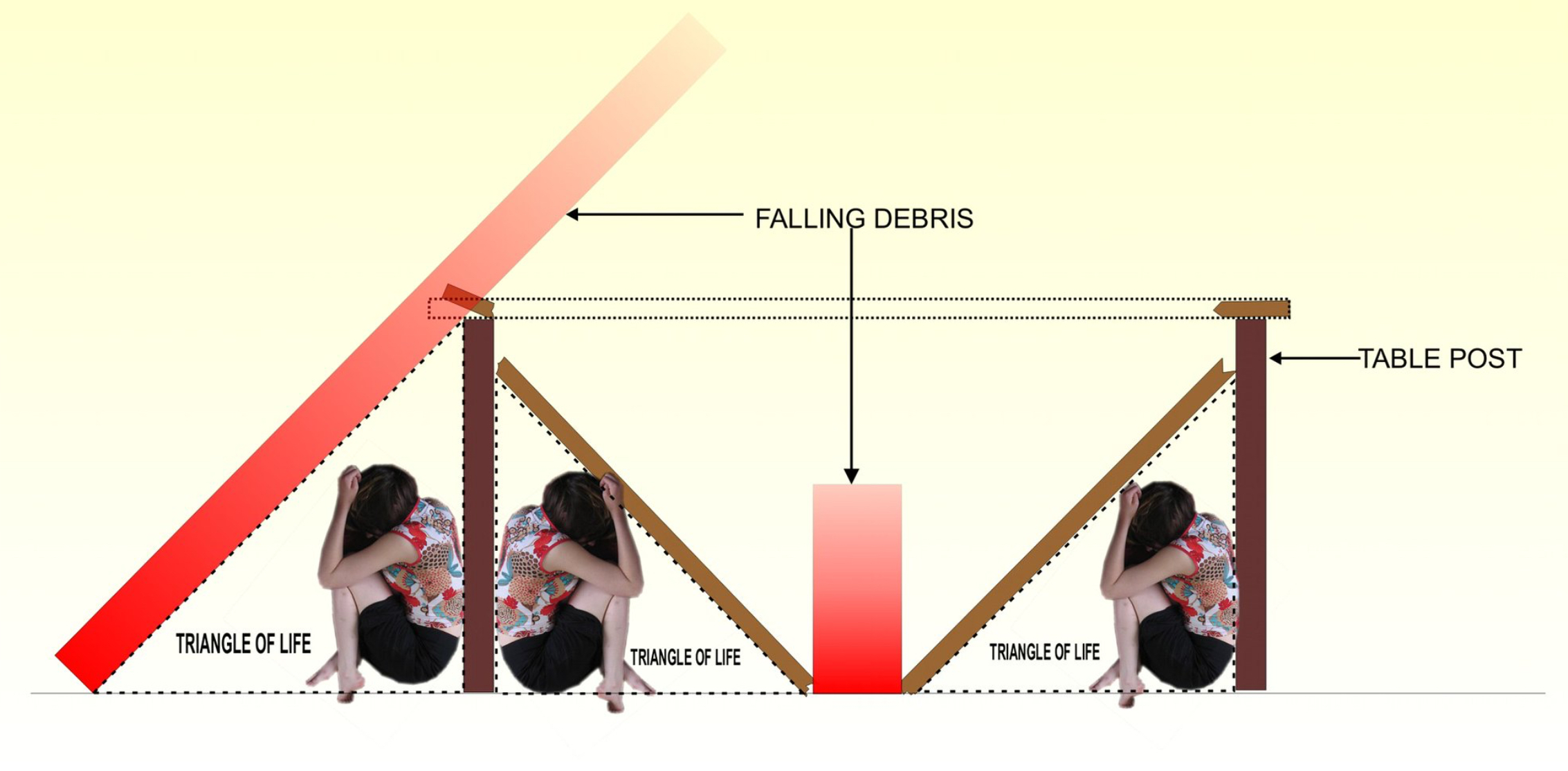
What is the Triangle of Life?


The Triangle of Life is a controversial concept that has gained attention in recent years as a potential way to survive earthquakes. It was first proposed by Doug Copp, a rescue worker who survived the 1985 Mexico City earthquake. In this post, we will discuss what the Triangle of Life is and what Doug Copp found about what to search for in case of earthquakes to save your life inside the triangle of life.

What is the Triangle of Life?
The Triangle of Life is a term coined by Doug Copp to describe a survival strategy during earthquakes. The concept is based on the idea that in a collapsed building, the safest place to be is not necessarily under a sturdy table or desk as traditionally believed. Instead, Copp argues that the best way to survive is to seek shelter in the space next to a large object or furniture that could potentially create a void, such as a sofa or bed.
According to Copp, the space next to these objects is called the "Triangle of Life." In the event of a collapse, the object will create a triangular space next to it, providing protection from falling debris. Copp argues that this space is much larger than the space under a desk, and therefore offers a greater chance of survival.

As chief of the American Rescue Team International for the past 16 years, Doug Copp had been circling the globe, offering his services in disaster zones from from El Salvador to Turkey.

You can read more about ( https://www.nbcnews.com/id/wbna8565549 )

What did Doug Copp find about what to search for in case of earthquakes?

Doug Copp spent years researching earthquake safety and rescue strategies. He found that the traditional advice of "drop, cover, and hold on" was not always the best course of action. Instead, he recommends the following steps to increase your chances of survival:

  1. Drop to the ground and cover your head with your hands.
  2. If possible, crawl to the Triangle of Life next to a large object or furniture.
  3. Stay alert and be prepared to move if necessary.

Copp also emphasizes the importance of being prepared for earthquakes by having an emergency kit, knowing how to turn off utilities, and having a plan in place for communicating with loved ones.

However, it is important to note that not everyone agrees with Copp's theory. Some experts argue that seeking shelter in the Triangle of Life could actually increase your risk of injury, as the furniture or object next to you could shift or collapse, trapping you. Others argue that seeking shelter under a sturdy desk or table is still the safest course of action.

The Triangle of Life is a controversial concept that has gained attention in recent years as a potential way to survive earthquakes. While some experts disagree with this theory, others believe that seeking shelter in the space next to a large object or furniture could increase your chances of survival. It is important to be prepared for earthquakes by having an emergency kit, knowing how to turn off utilities, and having a plan in place for communicating with loved ones.