ArcDivan logo Archidivan Architecture, design and intelligent tools
Current section

A full-browser white-on-black reading experience with golden architectural accents, without the old three-column blog look.

Explore Archidivan by architectural discipline

Smart Categories

Visitors can move by discipline instead of date. This is stronger for architects because they usually browse by design problem, material, software, specification topic, or supplier need.

Marcel Marceau: A Master of Mime

 Marcel Marceau: A Master of Mime


Marcel Marceau was a renowned French mime artist who captivated audiences around the world with his unique and mesmerizing performances. He is widely regarded as one of the greatest mimes in history, and his contributions to the art form have influenced generations of performers. In this article, we'll take a closer look at Marceau's life, his artistry, and his enduring legacy.


Early Life and Career


Marcel Marceau was born Marcel Mangel in Strasbourg, France in 1923. His parents were Jewish, and his father was a butcher who was killed in Auschwitz during World War II. Marceau himself was a member of the French Resistance during the war, helping Jewish children escape to Switzerland.


After the war, Marceau began his career as a performer, studying at Charles Dullin's School of Dramatic Art in Paris. He soon discovered a talent for mime, and in 1947 he created the character of Bip, a mischievous, childlike clown who would become his most famous persona.


Artistry and Legacy


Marceau's performances were characterized by his mastery of movement and gesture, his ability to convey complex emotions without words, and his keen sense of humor. His repertoire included a range of characters and situations, from the tragic to the comic, and his performances were often accompanied by music.


Marceau's work had a profound impact on the art of mime, helping to elevate it to a respected and widely recognized form of theater. He toured the world with his performances, inspiring audiences and performers alike. In addition to his work as a performer, Marceau was also a teacher, passing on his knowledge and expertise to a new generation of mimes.


Legacy and Influence


Marcel Marceau's legacy continues to be felt in the world of mime and beyond. He was recognized with numerous awards and honors during his lifetime, including France's highest civilian honor, the Legion of Honor, and he was inducted into the International Clown Hall of Fame in 1999.


Marceau's impact on the world of theater and performance is immeasurable, and his influence can be seen in the work of countless artists who have followed in his footsteps. His dedication to the art of mime and his commitment to using his talents to promote peace and understanding serve as an inspiration to us all.


Conclusion


Marcel Marceau was a true master of mime, a performer who used movement and gesture to convey powerful emotions and tell stories without words. His influence on the art of mime and on the world of theater as a whole is immeasurable, and his legacy continues to inspire new generations of performers. Marcel Marceau will always be remembered as a true artist and a great humanitarian.

Filipino Adobo: A Delicious and Iconic Dish

  Filipino Adobo: A Delicious and Iconic Dish


Filipino Adobo is a popular and beloved dish in the Philippines, known for its mouth-watering and savory flavors. The dish is a staple in many Filipino households and is often served during family gatherings, celebrations, and even on regular days. Adobo is a versatile dish that can be made with different meats such as chicken, pork, or even seafood, and is typically served with rice. In this article, we'll take a closer look at what makes this dish so special and how it has become an iconic part of Filipino cuisine.


Origins of Adobo


The origins of Adobo can be traced back to the pre-colonial era in the Philippines. The word "Adobo" comes from the Spanish word "adobar," which means to marinate or season meat. During the Spanish colonial period, the dish was introduced to the Philippines, and over time, it evolved into what we know today as Filipino Adobo.


Ingredients and Preparation


The basic ingredients of Adobo include meat (chicken or pork), vinegar, soy sauce, garlic, and bay leaves. Some variations may add sugar, onions, or coconut milk to the mix. The dish is traditionally prepared by marinating the meat in the vinegar, soy sauce, garlic, and bay leaves for several hours. After marinating, the meat is then cooked in the marinade until it is tender and the sauce has reduced to a thick, rich consistency.


Variations of Adobo


While the classic Adobo recipe is made with chicken or pork, there are many variations of the dish that use other types of meat or seafood. Some popular variations include Adobong Manok sa Gata, which adds coconut milk to the sauce, Adobong Pusit, which uses squid instead of meat, and Adobong Kangkong, which uses water spinach as the main ingredient.


Adobo Beyond the Philippines


Filipino Adobo has gained popularity outside of the Philippines, and can now be found in many Filipino restaurants around the world. The dish has also been featured in several international food shows and has become a symbol of Filipino cuisine.


Conclusion


Filipino Adobo is a dish that embodies the flavors and history of the Philippines. The combination of vinegar, soy sauce, garlic, and bay leaves creates a unique taste that is both savory and tangy. The dish's versatility and simplicity make it a popular choice for everyday meals and special occasions. Whether you are a Filipino or a food enthusiast, Filipino Adobo is a must-try dish that is sure to leave you wanting more.


Napoleon Bonaparte and Russia


Napoleon Bonaparte, one of the most renowned military commanders in history, is known for his ambitious military campaigns and successful conquests across Europe. However, his disastrous campaign against Russia in 1812 is considered to be one of the biggest military blunders of his career. In this article, we will explore the events leading up to the war and the consequences that followed.

Napoleon's Grand Army, which consisted of more than half a million men, invaded Russia in June 1812. The invasion was a part of Napoleon's plan to expand his empire further east and bring Russia under his control. However, the Russian army, led by General Mikhail Kutuzov, employed a scorched earth policy, destroying everything in the path of the French army, including crops, buildings, and supplies.

As the French army advanced, they were met with fierce resistance from the Russian army, who engaged in guerrilla tactics and avoided direct confrontation. This resulted in the French army becoming increasingly isolated and cut off from their supply lines. The Russian winter, which was one of the harshest in history, further added to their woes.

The French army, which was already suffering from starvation, diseases, and harsh weather conditions, was further weakened by a series of disastrous battles, including the Battle of Borodino in September 1812. Despite being able to capture Moscow, Napoleon was unable to secure any significant victories and was forced to retreat from Russia in October of the same year.

The retreat was a disaster, with the French army being constantly harassed by the Russian army and subjected to brutal weather conditions. By the time they reached the border, the Grand Army was reduced to a mere fraction of its original strength, with more than 400,000 men being killed or captured during the campaign.

The consequences of the war were catastrophic for both France and Russia. France suffered a significant loss of manpower, resources, and morale, which weakened the country's position in the subsequent wars. The Russian army, on the other hand, emerged victorious but at a great cost, with more than 200,000 men being killed or injured during the war.

The war with Russia was one of the most significant turning points in Napoleon's career, and it marked the beginning of his downfall. It also highlighted the importance of logistics, supply lines, and proper planning in military campaigns. The lessons learned from this campaign would be utilized in future conflicts, and it would inspire other military commanders to avoid similar mistakes.

Napoleon's invasion of Russia in 1812 was a disastrous campaign that resulted in the loss of hundreds of thousands of lives and resources. The harsh Russian winter, the Russian army's guerrilla tactics, and the scorched earth policy employed by the Russians all contributed to the French army's defeat. The consequences of the war were significant, and it marked the beginning of Napoleon's downfall.

What is the Triangle of Life?


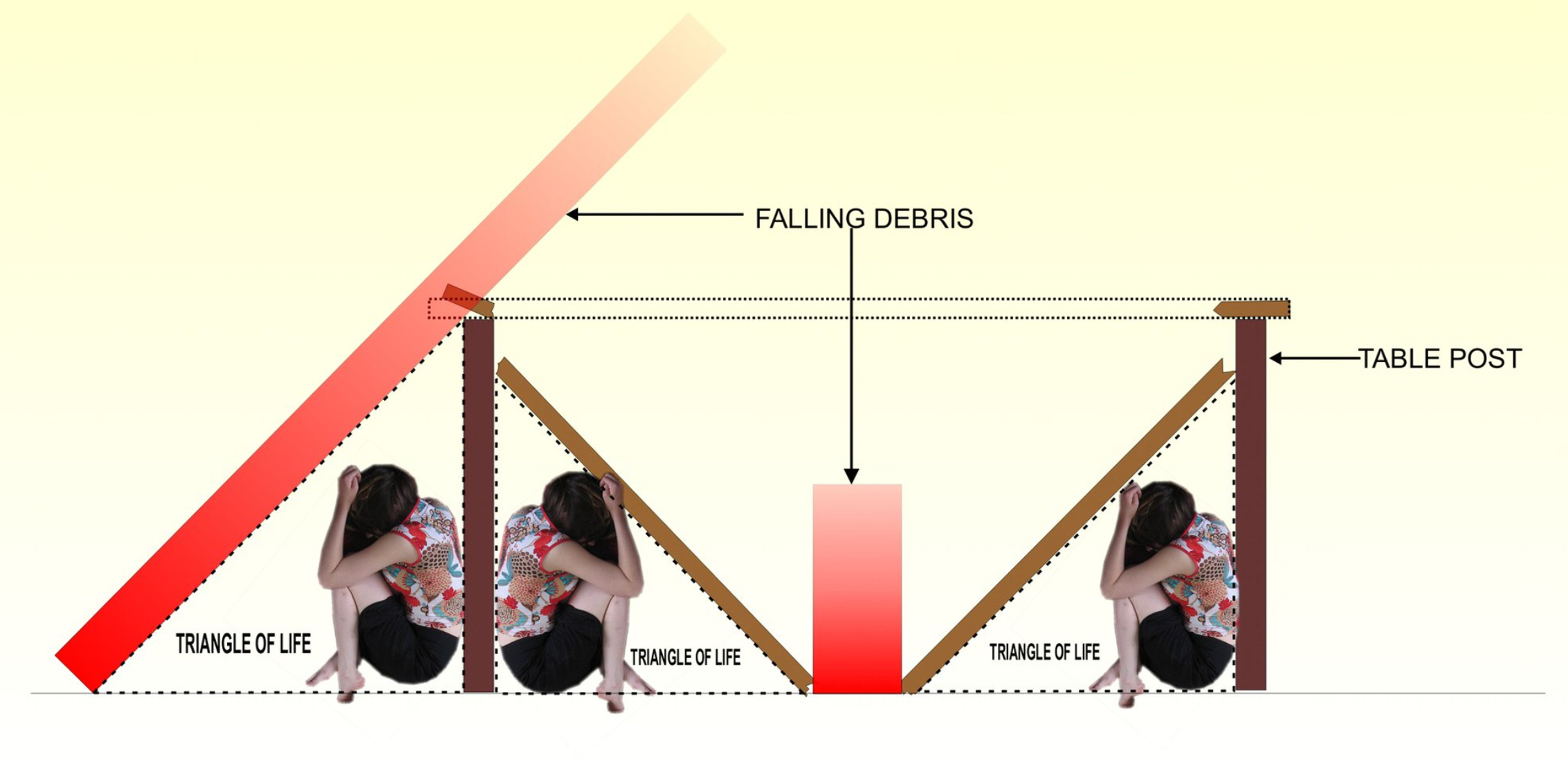
The Triangle of Life is a controversial concept that has gained attention in recent years as a potential way to survive earthquakes. It was first proposed by Doug Copp, a rescue worker who survived the 1985 Mexico City earthquake. In this post, we will discuss what the Triangle of Life is and what Doug Copp found about what to search for in case of earthquakes to save your life inside the triangle of life.

What is the Triangle of Life?
The Triangle of Life is a term coined by Doug Copp to describe a survival strategy during earthquakes. The concept is based on the idea that in a collapsed building, the safest place to be is not necessarily under a sturdy table or desk as traditionally believed. Instead, Copp argues that the best way to survive is to seek shelter in the space next to a large object or furniture that could potentially create a void, such as a sofa or bed.
According to Copp, the space next to these objects is called the "Triangle of Life." In the event of a collapse, the object will create a triangular space next to it, providing protection from falling debris. Copp argues that this space is much larger than the space under a desk, and therefore offers a greater chance of survival.

As chief of the American Rescue Team International for the past 16 years, Doug Copp had been circling the globe, offering his services in disaster zones from from El Salvador to Turkey.

You can read more about ( https://www.nbcnews.com/id/wbna8565549 )

What did Doug Copp find about what to search for in case of earthquakes?

Doug Copp spent years researching earthquake safety and rescue strategies. He found that the traditional advice of "drop, cover, and hold on" was not always the best course of action. Instead, he recommends the following steps to increase your chances of survival:

  1. Drop to the ground and cover your head with your hands.
  2. If possible, crawl to the Triangle of Life next to a large object or furniture.
  3. Stay alert and be prepared to move if necessary.

Copp also emphasizes the importance of being prepared for earthquakes by having an emergency kit, knowing how to turn off utilities, and having a plan in place for communicating with loved ones.

However, it is important to note that not everyone agrees with Copp's theory. Some experts argue that seeking shelter in the Triangle of Life could actually increase your risk of injury, as the furniture or object next to you could shift or collapse, trapping you. Others argue that seeking shelter under a sturdy desk or table is still the safest course of action.

The Triangle of Life is a controversial concept that has gained attention in recent years as a potential way to survive earthquakes. While some experts disagree with this theory, others believe that seeking shelter in the space next to a large object or furniture could increase your chances of survival. It is important to be prepared for earthquakes by having an emergency kit, knowing how to turn off utilities, and having a plan in place for communicating with loved ones.

Mosques Quran Decorations


Mosques are places of worship that hold great significance for Muslims all around the world. They are not only centers of prayer but also important cultural and architectural landmarks that reflect the diversity and richness of Islamic art and architecture. One of the most striking features of many mosques is the use of Quranic calligraphy as a form of decoration on the walls and domes. This art form has a long and rich history in Islamic culture and is a testament to the beauty and significance of the Quranic text. The use of Quranic calligraphy as a form of decoration dates back to the early days of Islam, when the Prophet Muhammad himself encouraged his followers to learn and recite the Quran. This led to a flourishing of Islamic calligraphy, with skilled artisans developing different styles and techniques to create beautiful and intricate designs that reflected the majesty and beauty of the Quranic text. Over time, these designs became an integral part of Islamic art and architecture, with Quranic calligraphy adorning everything from mosque walls to textiles and ceramics.


The use of Quranic calligraphy in mosque decoration is not just about aesthetics, however. It is also a way for Muslims to express their reverence for the Quran and to honor its central role in their faith. The calligraphy serves as a reminder of the importance of the Quranic text and the role it plays in guiding Muslims through their daily lives. For many, the beauty of the calligraphy is a source of spiritual inspiration and contemplation, and a reminder of the majesty and greatness of God.

The materials used in Quranic calligraphy vary depending on the style and technique being used. Traditional calligraphers often use ink and paper or parchment to create their designs, while contemporary artists may use a variety of materials including acrylics, oils, and gold leaf. The calligraphy itself can be created using a variety of tools, including reed pens, brushes, and even computer software.

One of the most famous examples of Quranic calligraphy in mosque decoration can be found in the Masjid al-Haram in Mecca, which is home to the Kaaba, the most sacred site in Islam. The mosque's interior is adorned with intricate calligraphy in gold and black, covering every inch of the walls and ceiling. The calligraphy is a mix of different styles and techniques, including Thuluth and Kufic, and serves as a testament to the beauty and power of the Quranic text.

Quranic calligraphy is an important part of Islamic art and architecture, and is a testament to the beauty and significance of the Quranic text. The use of calligraphy in mosque decoration serves as a way for Muslims to express their reverence for the Quran and to honor its central role in their faith. With its intricate designs and beautiful use of language, Quranic calligraphy continues to inspire and captivate people all around the world. 

Aquanit ( PORCELAIN SHOWER TILE ) and Seravista ( Porcelain Step )

Ceramic and porcelain tiles are popular choices for flooring, walls, and other surfaces in both residential and commercial settings. They are durable, versatile, and available in a wide range of colors, patterns, and textures. However, to ensure that you get the right tiles for your project, you need to write a detailed specification that includes all the relevant information. In this blog post, we'll explore the key points to consider when writing a specification for ceramic and porcelain tiles, as well as the section in specification CSI50 that they are related to.

CSI50 Section for Ceramic and Porcelain Tiles

Ceramic and porcelain tiles fall under Division 09 - Finishes in the MasterFormat system, which is used in the construction industry to organize construction information and project specifications. Specifically, they are covered in Section 09 30 00 - Tiling. This section includes the general requirements for tiling, such as substrate preparation, adhesive application, grouting, and cleaning.

Points to Consider When Writing a Specification for Ceramic and Porcelain Tiles

  1. Product Type: Ceramic and porcelain tiles come in various types, such as glazed, unglazed, polished, and textured. Each type has its own characteristics, advantages, and disadvantages, so it's important to specify the type that best suits your project requirements.

  2. Size and Shape: Tiles are available in different sizes and shapes, such as squares, rectangles, hexagons, and triangles. The size and shape of the tiles will affect the overall look and feel of the surface, so it's important to choose them carefully.

  3. Color and Pattern: Ceramic and porcelain tiles can be customized to match specific color and pattern requirements. However, certain colors and patterns may have longer lead times or higher costs, so it's important to specify them early in the design process.

  4. Quality and Performance: The quality and performance of ceramic and porcelain tiles can vary depending on factors such as durability, slip resistance, and resistance to stains and chemicals. It's important to specify the desired level of quality and performance for the tiles, as well as any relevant industry standards that they should meet.

  5. Installation: The installation of ceramic and porcelain tiles is a critical factor in their performance and longevity. It's important to specify the installation method, including the type of adhesive and grout to be used, as well as any special requirements for the substrate, such as moisture or pH levels.

Writing a specification for ceramic and porcelain tiles requires careful consideration of various factors, including product type, size and shape, color and pattern, quality and performance, and installation. By following the guidelines outlined in CSI50 Section 09 30 00 and considering these key points, you can ensure that your tile installation meets your project requirements and provides lasting value. 


Manufacturer:

Aquanit is the one of the biggest high-quallity ceramic/porcelain tile manufacturer in Turkey with
2 factories built on an area of 610 thousand square meters with a 12 million m2 capacity in a year.


Aquanit and Seravista


Briefly About Seranit;


Seranit is a pioneer for 'breakthroughs' with its superior quality for the last 30 years.


  • Founded in Bilecik 30 years ago as Turkey's first porcelain tile factory
  • Seranit joined Sinpaş Holding in 2002 as one of the largest holdings in Turkey at the end of its 10th anniversary
  • As a pioneer that manufactures unique products such as Superwhite Technical Porcelain and Aquanit Porcelain Shower Tile
  • Seranit provides services through approximately 300 points of sale in 60 countries around the world with its wide range of products from 10x10 cm to 90x135 cm.
  • The first company to offer 90x90 cm and 90x135 cm technical porcelain series with different color and finish alternatives to the Turkish market in 2007 by breaking new ground.
  • The company, which brings innovations and conveniences to the sector with the application techniques it has developed in exterior applications,
  • With its rich color and size options, trend-setting designs and its product portfolio, it is the preferred brand in projects.


https://www.seranit.com.tr/en/Referanslar

https://www.seranit.com.tr/en/Home/Kataloglar          

https://www.seranit.com.tr/en/TeknikCozumler

https://www.seranit.com.tr/en/Seriler


Seranit Grup

Paşalimanı Caddesi Hüseyin Baykara Sok. No:1

Üsküdar - İstanbul


T :+90 (212) 340 74 00 - Dahili 1335

G :+90 (549) 573 81 30

www.seranit.com.tr

Take the road(map) with fewer bumps along the way


Your path to product success


Plan product roadmaps that deliver quality customer experiences and impactful business results with Freehand.


Skip the manual work and start prioritizing and inclusively planning with these helpful tools & templates:


Try IBM's Product Planning template to create a cohesive strategy for new and existing products.


Create custom lines and shapes that fit your needs, and label them with text wherever needed.


Get feedback from collaborators directly within your freehand.


Capture user feedback and synthesize findings in one place.


Transformative collaboration for all the work you do.


FOLLOW US


InVision App, 41 Madison Ave, New York, NY


© 2022 InVision App
Disclaimer text